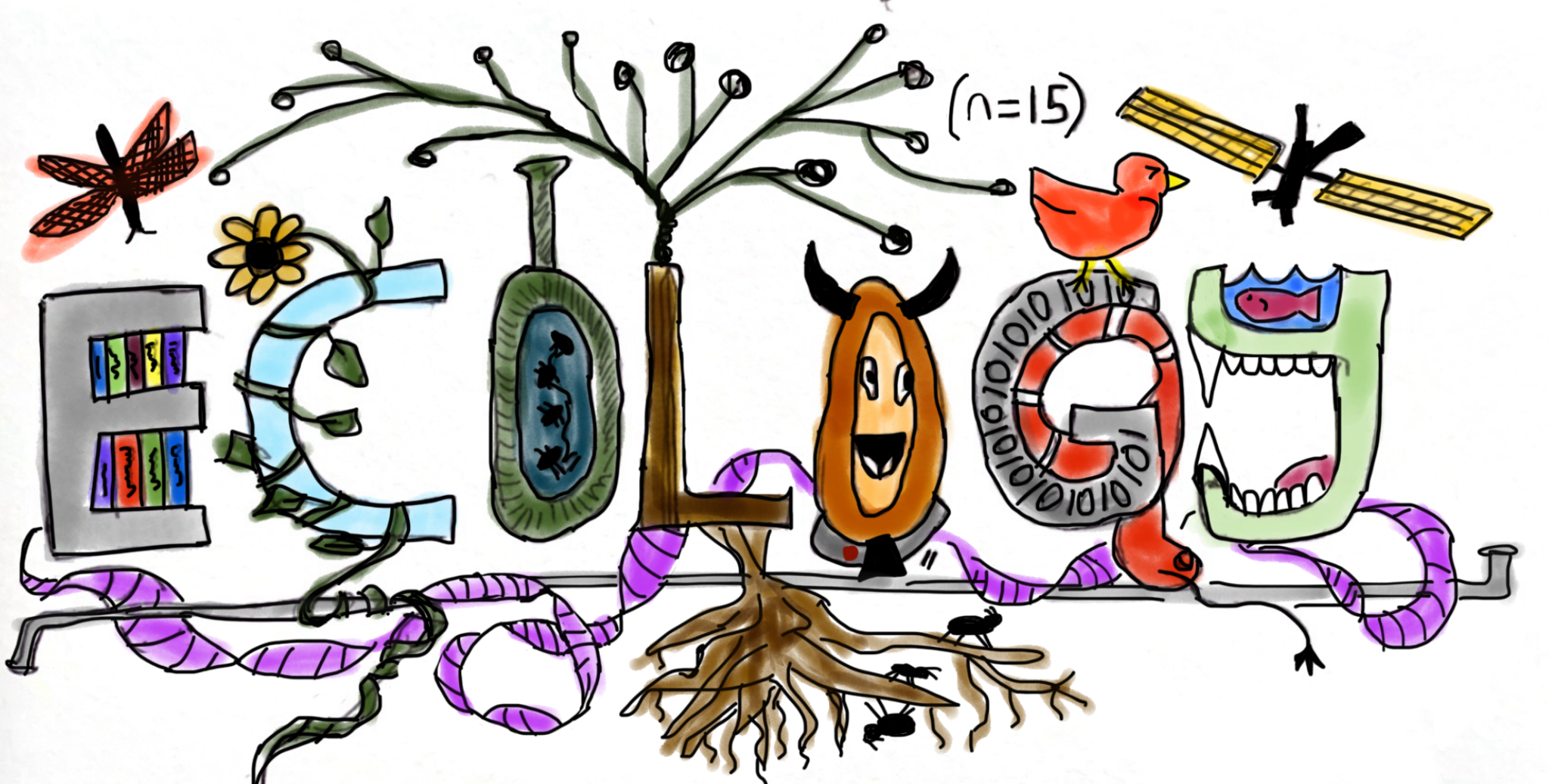
I am an emerging research ecologist with a focus on conservation, wildlife ecology, and spatial data science. In the long term I plan to work in academia, non-profit or government positions to help answer applied conservation questions by bridging field-based work with new quantitative methods and spatial dimensions. I believe in a world of rapid global change, remote sensing and spatial data are integral tools in applied conservation research of large landscape-wide, trans-boundary decisions, for managers, practitioners, and tenders to the natural world alike. I recognize that while these tools offer one way to view the natural world, crafting decisions requires multiple lens to develop sound change, and wish to uplift all views, particularly underrepresented views with my scientific support.
My research interests center on asking specific questions in a broad topic, but generally involve how animal behavior is altered by anthropogenic underpinnings. I like to think about who (?), where (?), what (?), why (?), and how (?) animals interact with environment and what informs these distributions. I like to connect these findings with a broader ecological context and build questions reciprocally that can inform conservation policy. I aim to bridge interdisciplinary methods with collaborators and a toolbox made up of fieldwork, spatial data science, remote sensing, fieldwork, animal movement modeling, machine learning and ecological theory that can support a range of taxa.
My skills have influenced global policy and decision-making on various topics, including mammals, waterfowl, raptors, songbirds, tropical ecosystems, and landscape research. My experience spans years of fieldwork across diverse regions, from the Western US to the Alaskan Arctic to the Brazilian Amazon, in support of various organizations. Additionally, my background as a Pro Ski Patroller, SAR Member, and EMT provides essential risk management in high-stakes fieldwork.
Lastly, we can continually improve how we support our community. Conservation and justice are tied together. Environmental change has historically impacted the most marginalized people first and will continue to do so. As we develop solutions we must include and support all perspectives. Often, this can come from diverse perspectives within positions of power, such as scientists. From my place of privilege I am dedicated to supporting others wherever possible and a fostering a sense of belonging. Second, a way I would like to grow in the next 5 years is to better facilitate science communication and bridge highly-specific ecological methods to the public eye in hope to add transparency to ecology. Public trust in science continues to erode, and encouraging the support of research and science-guided policy is fundamental to the wellbeing of our planet and people. I have provided a plain language research statement below:
Plain language research statement: Hi, my name is Jayden. I am a scientist who studies how animals and their environment are connected. I look at how animals change their behavior, how they move, and how they choose their habitats. I believe that understanding these connections can help us make better decisions to protect wildlife. I enjoy sharing my findings with others to raise awareness about the importance of conservation. My goal is to inspire people to care about and protect the natural world. By working together and prioritizing nature, we can make a difference for the ecosystem we are a part of, which supports human well being, animals, and our planet.]